South Arts 2024 Southern Prize and State Fellows Exhibition
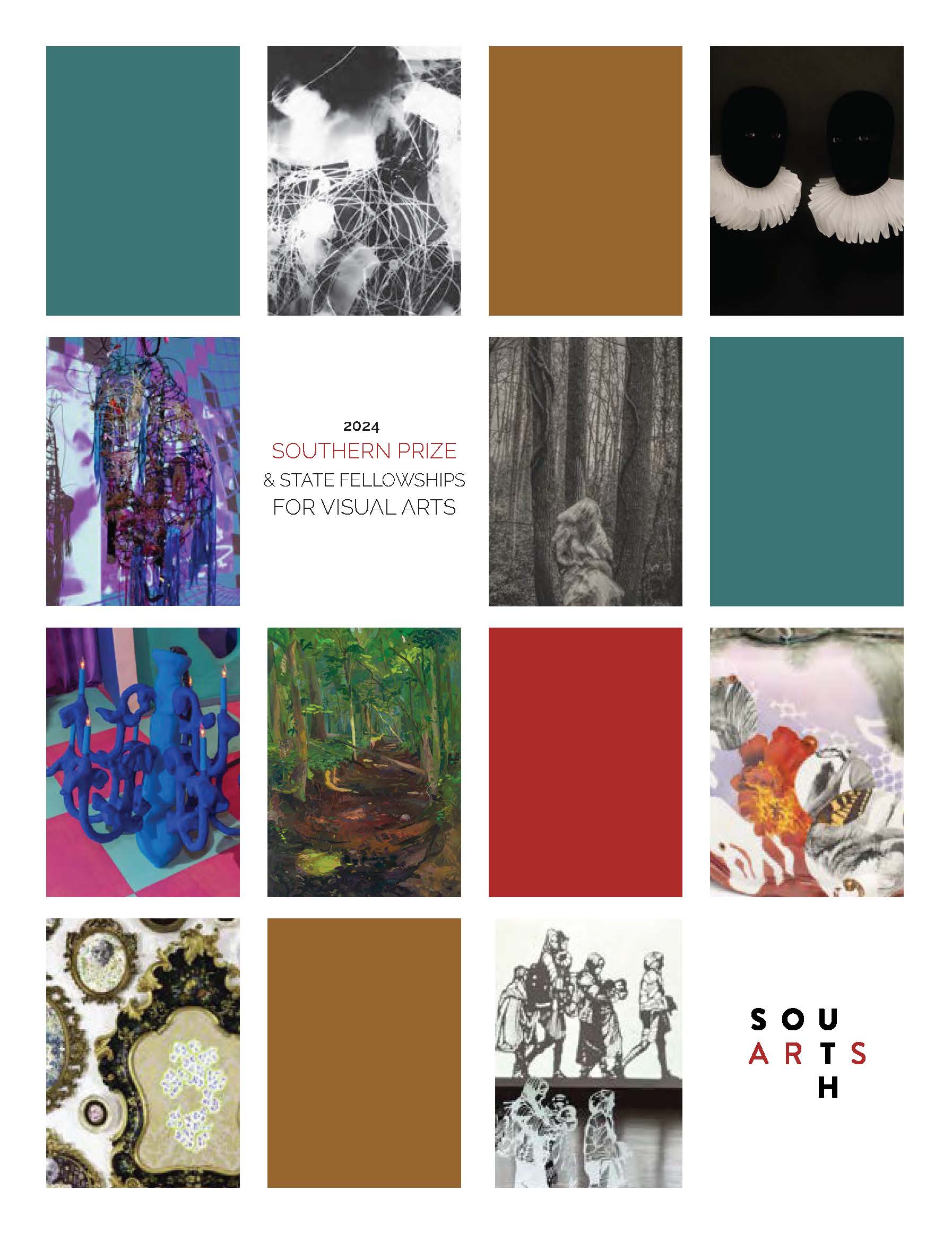
2024 SOUTHERN PRIZE AND STATE FELLOWS EXHIBITION
The City of Charleston Office of Cultural Affairs presents South Arts’ 2024 Southern Prize and State Fellowships Exhibition, on view June 27-August 3, 2025 at City Gallery. City Gallery will host a reception on Friday, June 27 from 5:00-7:00 p.m.; it is free and open to the public.
South Arts’ 2024 Southern Prize and State Fellowships Exhibition is a touring exhibition of the award and fellowship recipients. SouthArts, headquartered in Atlanta, Georgia, is a nonprofit regional arts organization whose mission is to empower artists, organizations, and committees and to increase access to arts and culture. Since 2017, its Southern Prize & State Fellowship Program has recognized and awards direct financial support to some of the top contemporary artists in the region. A State Fellowship is awarded to an artist from the nine Southern states (Alabama, Tennessee, Kentucky, Georgia, North Carolina, Mississippi, Louisiana, Florida, and South Carolina), and a second jury selects the Southern Prize finalists and winner.
This is the fifth year that South Arts has established a touring exhibition for the program. Shannon Lindsay acted as curator for this year’s exhibition; she is Associate Lecturer and Gallery Director for the University of Central Florida.
The 2024 SouthArts State Fellowship cohort in this exhibition includes: Antony (Tony) M. Bingham, Alabama; Nelson Gutierrez, Tennessee; Robyn Moore, Kentucky; Zipporah Camille Thompson, Georgia; Isys Hennigar, North Carolina; Brooke P. Alexander Mississippi; Macon Reed, Louisiana; and Charles Clary, South Carolina. Antony (Tony) M. Bingham is the winner of the 2024 Southern Prize.
Words from curator Shannon Lindsey:
Artists based in the American South, either by origin or relocation, express our identities, experiences, hardships, and joys visually and unapologetically. The nine 2024 South Arts Southern Prize State Fellows for Visual Arts are no exception. They use a variety of mediums and processes to express their identity, culture, environment, and build their own constructs or subvert constructs they have been placed historically and within the contemporary landscape. These artists actively explore a variety of concepts including: referencing and examining complex histories and oppression, reinterpreting their environments and relationships, navigating real and imagined spaces; but all fiercely advocate for their individuality and collective communities.
The 2024 Southern Prize and State Fellowships for Visual Arts exhibition continues the rich history of the program’s celebration of diversity in media, subject matter, and conceptual investigations. This year’s prize fellows explore traditional materials through contemporary processes including photography, sculpture, painting, ceramics, installation, mixed media, and sound components to negotiate and confront their individual identities and give visibility to the invisible or overlooked.
So, how do we define “Southerness?” It is difficult to narrow down a specific definition due to our beautifully worn tapestry woven with diverse cultures and traditions, but also latent with hardship, invisibilities, and oppression. However, our shared characteristics of persistence, resourcefulness, and determination despite all odds are inherent in our shared Southern experiences. The South Arts organization and the 2024 South Arts Southern Prize State Fellows for Visual Arts exemplify “Southerness” through their ambitious and dynamic celebration and examination of individual and cultural identities within regional, national, and global contexts.
Meet the 2021 Southern Prize & State Fellowship Recipients
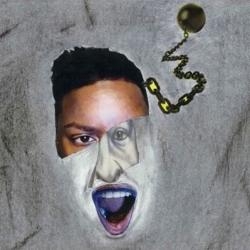
TAMECA COLE
2021 Alabama Fellow
About the Artist
Birmingham native and resident Tameca Cole (b. 1971) in 2020-2021 was included in New York’s MoMA PS1 exhibition Marking Time: Art in the Age of Mass Incarceration. She also received a 2020 commission from The New York Times Style Magazine to illustrate a short story by Ayana Mathis. Cole received a grant from the Art Matters Foundation in 2020 and was awarded a PS1 residency for artists who have been affected by the justice system. Her work has received widespread attention from media outlets such as The New York Times, The New York Review, New York Magazine, Art in America, ARTnews, ArtForum, Hyperallergic, The Art Newspaper, The Nation, Bloomberg and NPR. From 2002 – 2016, Cole was a student in the Auburn University Prison Arts + Education Program.
Artist Statement
My name is Tameca Cole. I’m 49 years old. I’m a life-long resident of Birmingham, Alabama. Currently, I’m serving life on parole after serving approximately 26 years in the Alabama Department of Corrections.
I went into the prison system at a young age but always with a hopeful attitude that a better future awaited. Most of my time was spent going to trade-school to upgrade my job skills and reading. I signed up for a creative writing class sponsored by Auburn University, and that’s when I found my purpose in life. Once I reconnected with my creative side, I never looked back.
Art and writing allow me to address my personal demons in a way that doesn’t hurt others. This gives me an outlet to express how the cruelty of my incarceration, injustice and experience with racism have affected me. They give me the power to show other human beings how degrading it feels to be Black in America and still live under systemic racism.
I consider my art to be an educator, a weapon and a thought-provoking conversation about change.
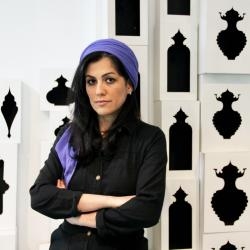
RAHELEH FILSOOFI
2021 Tennessee Fellow
About the Artist
Nashville resident Raheleh Filsoofi (b. 1975) was born and raised in Iran and has lived in the US South for more than 17 years. Among her solo exhibitions are those at Spinello Projects Gallery in Miami, FL; Georgia Southern University in Statesboro; Texas’ University of Houston Downtown; and Abad Gallery in Tehran, Iran. Two-person exhibitions include those at Palomar College in San Marcos, CA, and Rosemary Duffy Larson Gallery in Davie and the Cultural Council for Palm Beach County in Lake Worth, both in Florida. In the United States, Filsoofi’s work has been included in group shows in some 10 states, including at Strohl Art Center in Chautauqua, NY; C24 Gallery in New York City; Brickell City Centre in Miami, Arts Warehouse and Cornell Art Museum in Delray Beach, Bailey Contemporary Arts Center in Pompano Beach and Art and Cultural Center/ Hollywood, all in Florida; Veronique Wantz Gallery in Minneapolis, MN; and the Imago Foundation for the Arts in Warren, RI. In Iran, Filsoofi has shown at the Contemporary Art Museum of Isfahan and, in Tehran, the Iranian Artists Forum, Saba Art and Cultural Institute and Niavaran Cultural Center. Filsoofi holds a BFA from Al-Zahra University in Tehran and an MFA from Florida Atlantic University in Boca Raton. She teaches ceramics at Vanderbilt University in Nashville.
Artist Statement
Through years of multi-disciplinary practice, I’ve kept pace with rapidly changing socio-political debates around the world and their relatively expansive influences on human conditions. Immigration, borders and cultural communications are today’s most fundamental discourses, which are immensely interwoven with notions of identity, belonging and inhabitation. Art can be an intermediary language shared between individuals, nations and cultures, addressing these issues by touching the innermost layers of personality within people.
I’ve used different aesthetic strategies by experimenting with a wide range of materials relevant to my subject matter, such as ceramics, poetry and ambient sound and video. I use those media to negotiate and access concepts of heritage, place of origin, orientation toward or away from origin and cultural adaptability. My multimedia installations are rooted deeply in my cultural, Iranian background and the new identity I acquired as an immigrant. The installations aim to challenge the viewer’s existing point
of view and personal perspectives about others and themselves. These interactive pieces invite the onlooker to delve into my recollections of sense, sound, place and memories of my journeys across national and international borders.
JOYCE GARNER
2021 Kentucky Fellow
About the Artist
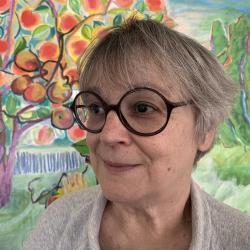
Prospect, KY, artist Joyce Garner (b. 1947) was born and raised in Covington, also in Kentucky, the state where she has lived all but five years of her life. She has had more than two dozen solo and two-person exhibitions in seven states. Among them are those in Kentucky at the Owensboro Museum of Fine Art, Louisville’s Jewish Community Center, Kentucky Artisan Center at Berea, The Carnegie in Covington and Lexington’s Headley-Whitney Museum, New Editions Gallery, Bluegrass Airport Gallery and Central Bank. The exhibitions also include those at Thyen-Clark Cultural Center, Elkhart’s Midwest Museum of American Art, Oakland City University and Indianapolis’ Hot House Gallery, all in Indiana, and venues in Pennsylvania, Ohio, Maryland, Tennessee and Alabama. Garner’s work was included in some 50 group shows in 10 states and Latvia, the Republic of Ireland, Northern Ireland and Belgium. She received a BS from the University of Kentucky.
Artist Statement
Wall-sized canvases let me explore the complexity of family through time. They are filled with hopes, regrets and wishes – about the past and the future. They are also like an ancestry chart or family tree where each choice branches onward – emotional dialogues. The interactions are not just within a family but with a family history, which includes society at large and our natural world. Working big lets me paint novels rather than poems.
I have an extended allegory of people coming together around a table. Helpful figures of speech: get everyone together around the table, turn the table, wait on tables, get a seat at the table, set the table, put something on the table (or take it off), table it for now, no room at the table, under the table.
So a painting might start with a circle for the table, and then I draw some chairs – empty. Then I get to seat a person. They might be young/old, shy/extroverted, sly/unknowing, a participant or a witness, involved or oblivious or dreaming. I don’t want realism in the faces, but I do want an expression that is readable. This is tricky, and I often back off the drawing to avoid depicting a specific person’s face.
My intent for my work comes from how I love to sit in front of a piece in the morning with a cup of hot tea in my hands and let my mind go. I want art that gives me a place to go.
MYRA GREENE
2021 Georgia Fellow
About the Artist
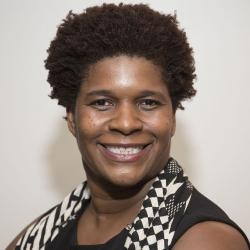
Atlanta artist Myra Greene (b. 1975) is a New York City native. Her work is in the collections of the National Gallery of Art in Washington, DC, the Museum of Fine Arts in Houston, Chicago’s Museum of Contemporary Photography, the Studio Museum in Harlem, the Nelson-Atkins Museum of Art in Kansas City, MO, and the Princeton University Art Museum. She has had 17 solo exhibitions nationally and internationally. Among them were those at the Center for Photography at Woodstock, NY; Williams College Museum of Art in Williamstown, MA; Atlanta’s Museum of Contemporary Art; and Corvi-Mora gallery in London. Greene’s work has been in more than 50 group shows nationally and internationally. She holds a BFA from Washington University in St. Louis, MO, and an MFA from the University of New Mexico in Albuquerque. Greene is the chair of the Department of Art & Visual Culture at Spelman College in Atlanta.
Artist Statement
My work explores abstractions of race and the body. Engaging with textiles, the focus of my artistic practice is the manipulation of color and how our understanding of color is completely dependent on its context – materially, culturally and historically. By mimicking and evoking the color brown when
printing and dyeing fabric, the resulting colors are reminiscent of my skin tone, creating a conceptual visualization of identity politics.
In Piecework, fabrics are systematically dyed their complementary color in order to create a smooth transition to brown. Inspired by traditional Dutch Wax patterns found on African textiles, I further silkscreen digitally stitched patterns onto the dyed fabric using metallic inks. Laden with cultural and historical references (triangles, for example, provide insight into my personal history as well as into movements in the diasporic slave trade), these works emphasize the power of hue and form and their ability to create an abstraction based in the illusion of space through color.
In Mixed, each piece is a composition of hand-dyed strips of fabric that fade from rich tones to brown. The final construction is a gradation that calls attention to the intricacies of each layer that creates the whole. The dyed textile is seductive in nature. In its lack of uniformity, it undulates, uncovering captivating textures on the surface of the work. The color brown is not a pure color, but a tone, a composite and a beautiful blend of complex information.
JEWEL HAM
2021 North Carolina Fellow
About the Artist
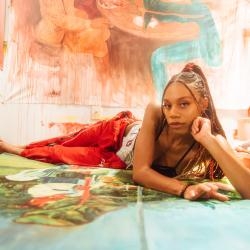
Charlotte artist Jewel Ham (b. 1998) was born in Greensboro, NC, and raised in Charlotte. She received her BFA in 2020 from Howard University in Washington, DC, and also studied at that city’s Corcoran School of the Arts and Design and London’s Slade School of Fine Art. Ham’s almost 20 exhibitions include solo shows at the Eubie Blake Cultural Center in Baltimore, MD, Diet Starts Monday in Washington, DC, and the Harvey B. Gantt Center for African-American Arts + Culture in Charlotte. Among her group exhibitions are those at Galerie Cécile Fakhoury in Dakar, Senegal; CFHILL in Stockholm, Sweden; the Museum of Science and Industry in Chicago, Ill.; AfroHouse and 17 Frost Gallery in New York City; Howard University; and the Mint Museum in Charlotte. Ham received commissions for a Black Lives Matter mural at the Keith YMCA and the Stephen Curry Renovation Project Mural at the Carole Hoefner Center, both in Charlotte.
Artist Statement
bell hooks describes “talking back” as “a form of conscious rebellion against dominating authority.” My work intends to speak with the same voice; approaching narrative portraiture as an act of resistance.
Although the indisputable necessity of financial reparations owed to the Black community may be out of my hands, I am interested in using my artwork to visualize the more immaterial realities of restitution for my community. How would it look to reclaim our time, spaces and histories?
As the Black experience and its accompanying culture continue to define popular and consumer culture alike, our individual narratives are historically ignored and/or over-commodified, leaving many of us socially and economically displaced. Despite the continued history of social disservice, creativity remains integral to our identity. Black folk across resource brackets continue to exist as originators and tastemakers alike. With attention to the unapologetic wit and innovation inherent to the Black experience, I intend to amplify our narratives through authentic and accessible visual representation.
My work undresses the emotional realities that often accompany various facets of “everyday” Black life. With these sentiments hinging on casual existence, I present chaotic imagery against a backdrop of commonplace. Heavily influenced by Black popular culture and the unapologetic lyricism in Black femme rap, I manipulate wordplay, sensuality and symbolism to aestheticize an intimate view of inner turmoil. My practice actively highlights the beauty and fury of the Black experience.
MING YING HONG
2021 Mississippi Fellow
About the Artist
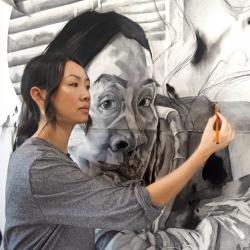
Starkville artist Ming Ying Hong (b. 1990) is a native of Guangzhou, China, who grew up in Los Angeles and has lived in the US South on and off for more than a decade. Since 2012, she has had solo exhibitions at Western Illinois University in Macomb; the University of Alabama in Huntsville; Florida’s Broward College South Campus in Pembroke; the University of South Carolina in Columbia; Doane University in Crete, NE; popblossom in Norfolk, VA; and the Green Building Gallery in Louisville, KY. Her work has been in some 30 group shows in about 20 states and South Korea. Among them are those at the CICA Museum in Gimpo, South Korea; the University of North Carolina Charlotte; the Masur Museum in Monroe, LA; the Attleboro Arts Museum in Massachusetts; the Appleton Museum of Art in Florida; Hillyer Art Space, Washington, DC; the Mildred Lane Kemper Museum at Washington University in St. Louis and Contemporary Art Museum St. Louis, both in Missouri; Ice Box Gallery in Philadelphia, PA; Bradley University in Peoria, IL; Eastern Michigan University in Ypsilanti; Mississippi State University in Starkville; and Alabama’s Jacksonville State University. Hong has had residencies at the Vermont Studio Residency in Johnson and at Temple University in Philadelphia. She has a BFA from the University of Kentucky and an MFA from Washington University in St. Louis. Hong teaches at Mississippi State University.
Artist Statement
My work explores bodies at the margins, questioning the way we define, categorize and assign power to our bodies. Recognizable forms are fragmented, defamiliarized and remixed to conflate the masculine with the feminine, the dead with the alive, the ideal and the grotesque. By combining these seemingly contradictory elements, it becomes clear that opposites that once defined each other overlap, ultimately dismantling the system in which one definition is privileged over another. Masculinity no longer prevails over the feminine, strength no longer prevails over the delicate, and stability no longer prevails over the broken. Instead, the work encourages us to examine the in-between spaces of these binaries – the spaces that fall outside of our clear-cut definitions and hierarchies.
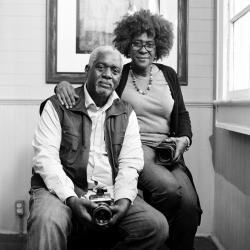
KEITH CALHOUN &
CHANDRA McCORMICK
2021 Louisiana Fellow
About the Artists
New Orleans artists and natives Keith Calhoun (b. 1955) and Chandra McCormick (b. 1957) showed selections of their photographs of Louisiana’s Angola state prison at the 56th Venice Biennial in 2015. Their 2006 solo exhibition Soul of The City was at The Peace Museum in Chicago. Slavery: The Prison Industrial Complex from 2014–2018 traveled to the Ogden Museum of Southern Art in New Orleans, the Hilliard Museum in Lafayette, LA, the Frist Museum in Nashville, TN, and Maryland’s Baltimore Museum of Art. Among group exhibitions they have participated in are those at the Smithsonian Institution’s Anacostia Museum in Washington, DC; the Brooklyn Museum and MOMO PS 1 in New York City; the Ogden Museum, Louisiana State Museum and the New Orleans Museum of Art in New Orleans; the University of Florida and the University of Central Florida; the Flaten Art Museum at St. Olaf College in Northfield, MN; and California’s San Jose Museum of Art. The 2000 Anacostia Museum exhibition, Reflections in Black: A History of Black Photographers 1840 to the Present, was accompanied by Deborah Willis’ book by the same title. Calhoun’s and McCormick’s work has been published and discussed widely, including in Musée Magazine, Brooklyn Rail, Artsy Magazine, The New Yorker, ArtReview and Aperture Magazine, twice; on CBS and PBS; and at Harvard University and Duke University.
Artist Statement
We are artists based in New Orleans, Louisiana. Our work is Humanity, Community, and Environmentally Centered. Our mission is to express the human experience and to creatively tell the stories through images of the people and places we experience with dignity, beauty, and strength through photo essays accompanied by a written narrative. These images are from our archive of work, which at one time we called “Damaged.” This was the work that was inundated by the Hurricane Katrina flood waters. We chose to save and restore the work. We began the restoration and printing of the transparencies and negatives, which continues today. Images we thought were damaged we found were extraordinarily beautiful. The original images were full of joyful people, rhythms, movement, sound and celebrations, which is still ever-present. You can hear the music and see these images bursting with as much energy, spirit and vibrations as the vibrant colors and symbols they hold.
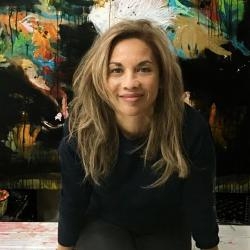
MARIELLE PLAISIR
2021 Florida Fellow
SOUTHERN PRIZE WINNER
About the Artist
Hollywood, FL, resident Marielle Plaisir (b. 1978) is a French Caribbean multi-media artist with strong ties to Guadeloupe who was born in Le Havre, France. Among her solo exhibitions are several in Bordeaux, France, including at the Musée d’Aquitaine; the NSU Art Museum Fort Lauderdale, FL, with the ACTA NON VERBA performance in collaboration with Anselm Kiefer; MOCA Miami and Locust Project in Miami; Tafeta Gallery in London; DEBUCK Gallery in New-York; St. Paul and St. Pierre Cathedral in Guadeloupe; and the French embassy in Senegal. Among group shows Plaisir has participated in are those at New York’s Hunter Gallery; Oolite Art in Miami Beach, Miami’s Little Haiti Cultural Center and Doral’s DORCAM, all in Florida; Memorial ACTe museum in Guadeloupe; and Musée d’Orsay in Paris. Her works have been presented widely at fairs and biennials in London, New York, Miami and Miami Beach, Paris, Florence, Italy, Sao Paulo, Brazil, Dakar, Senegal, Santo-Domingo, Dominican Republic and elsewhere. Plaisir graduated from the National Superior School of Fine Art and Decorative Arts in Bordeaux.
Artist Statement
Through a range of media that includes painting, sculpture, photography, installation, film and performances, I present intense visual experiences with work that examines the concept of social domination and explores issues of colonialism alongside those of race and class. My work particularly examines the construction of identity. It asks what constitutes our collective contemporary identity today as people born in the struggle against domination and power respond and behave. I underline common issues between U.S. Black history and Caribbean history: the labor movements and the fights for equality throughout history through literature and philosophy. One of the ways in which I have countered anti-blackness through my work is by presenting the color black itself as the subject of my paintings. Rather than use readymade black paint, I chose to create my own shade, utilizing every color in my palette as a symbol for the beauty, power and multitudes of blackness. Within this space, I populate my backgrounds with lush imagery drawn from nature’s constellations, natural forms and flowers, inspired by both my Caribbean roots and my imagined ideal of a utopia without oppression. The works both resist and hope – they are reflective of my wish to not only draw attention to the importance of challenging harmful histories but also speak to the interconnection of humans, the universality of fractured identities and the power of recognizing and depicting inner worlds.
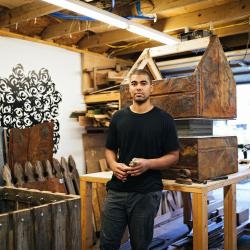
FLETCHER WILLIAMS III
2021 South Carolina Fellow
SOUTHERN PRIZE FINALIST
About the Artist
North Charleston, SC, native and resident Fletcher Williams III (b. 1987) has shown his work in more than two dozen exhibitions since receiving his BFA at New York’s Cooper Union in 2010. Among the mixed media artist’s five solo exhibitions are Traces at 701 Center for Contemporary Art in Columbia, SC, in 2018 and Promise Land in 2020 at the historic Aiken-Rhett House in downtown Charleston, SC. The latter was a venue-wide exhibition in which Williams engaged the urban plantation’s grounds and indoor spaces with his paintings, sculptures and installations. Among the group shows that included Williams’ work are those at the Museum of Contemporary African Diasporan Art, the Caribbean Cultural Center and Cooper Union, all in New York City; Gateway Project Spaces in Newark, NJ; the San Diego Museum of Contemporary Art + African American Museum of Fine Art in California; the Mint Museum and Hodges Taylor Gallery in Charlotte, NC; the Mann-Simons Site and McKissick Museum in Columbia, SC; and several venues in Charleston and elsewhere in South Carolina. At the Mint Museum, Williams was included in Coined in the South, a 2019–2020 overview of art in the US South. Williams’ work is in the permanent collection of Charleston’s Gibbes Museum, where he was a visiting artist in 2019. He worked on the set of the Amazon Prime series The Underground Railroad, and his work has been discussed in some two-dozen publications, including the Wall Street Journal and the New York Times.
Artist Statement
My work engages the rituals and myths of the American South. An interest in the psychogeography of the South and our desire to establish a home and self within it has prompted my working methodology, which incorporates both found and natural materials and an exhibition practice that utilizes public and historic sites. I often paint with Spanish moss, build house-like structures with salvaged wood and tin roof and fashion delicate sculptures out of handwoven Charleston Palmetto Roses. My works are architectural, figural, tactile and multi-sensory. The work reflects my curiosity about people, place, design and process.
A special thanks to South Arts and their sponsors:


ABOUT CITY GALLERY:
City Gallery, located at Joe Riley Waterfront Park, is owned by the City of Charleston and operated by the City of Charleston Office of Cultural Affairs, presenting an annual program of exhibitions and events featuring the finest contemporary art from local, regional, national and international artists, with a focus on the Lowcountry. City Gallery provides access to the visual arts for everyone in Charleston, visitors and residents alike, by offering exhibits that are all admission-free. City Gallery is located at 34 Prioleau St. in downtown Charleston.
